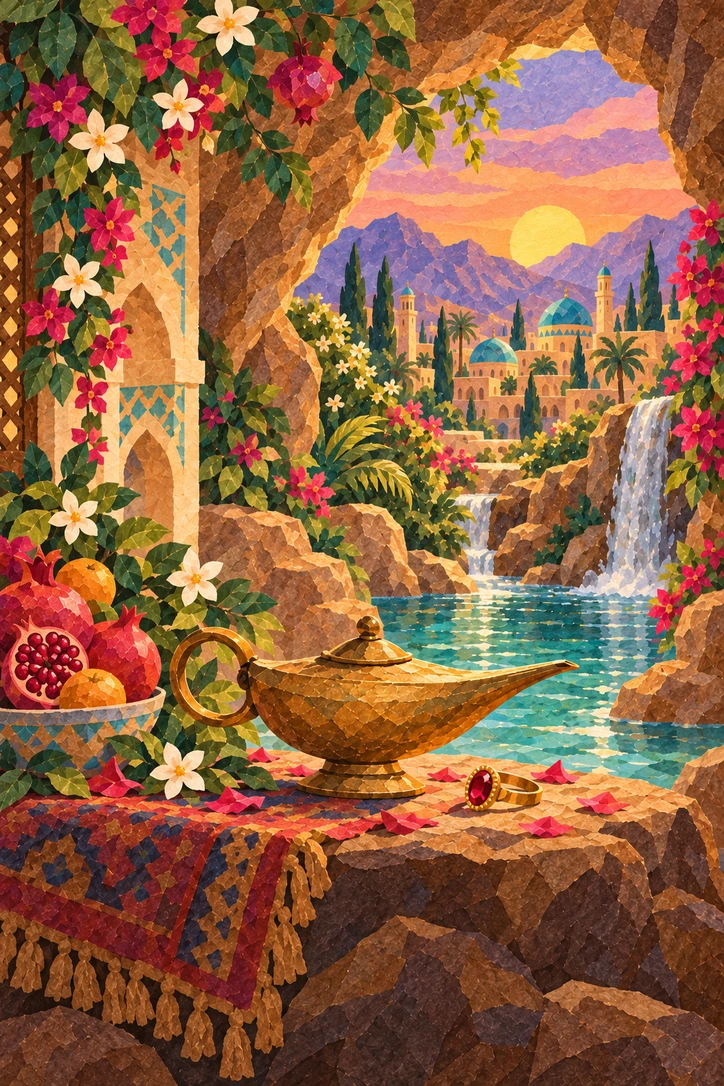
Aladdin and the Wonderful Lamp · Part 1 of 3
A Lamp in the Cave
Two enchanted objects change Aladdin’s life—and draw dangerous enemies to his door.
Preview the first three pages. Sign in to read the whole book.
Explore the libraryRead a preview
A Lamp in the Cave
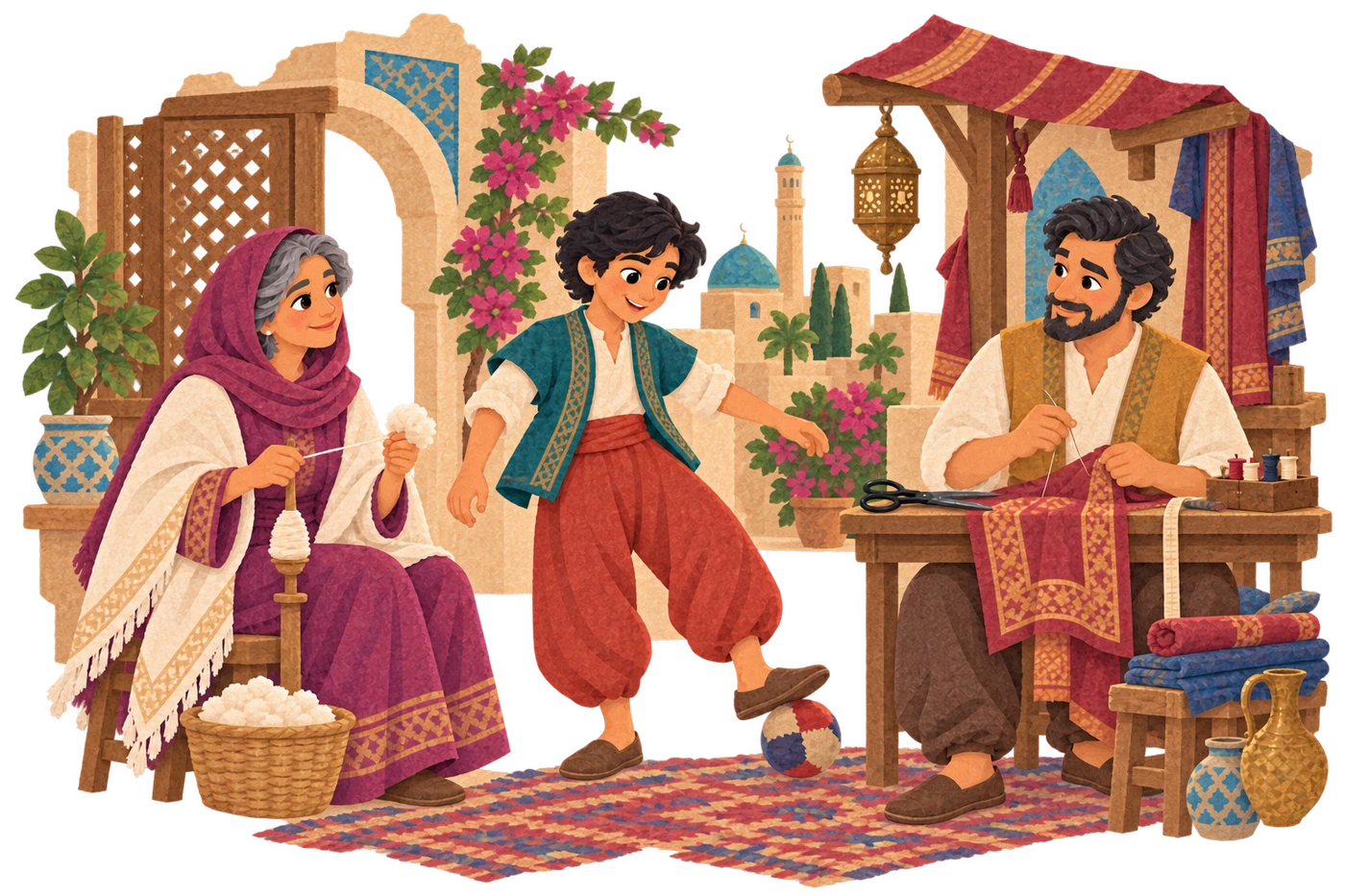
In a city in Persia, Aladdin was the son of a poor tailor called Mustapha, but preferred playing with other boys to learning his father’s work. His father hoped he would learn a trade.
Mustapha grew sorrowful and died; Aladdin then lived with his mother, who earned their living by spinning cotton. She worked hard to feed them both.
A Lamp in the Cave
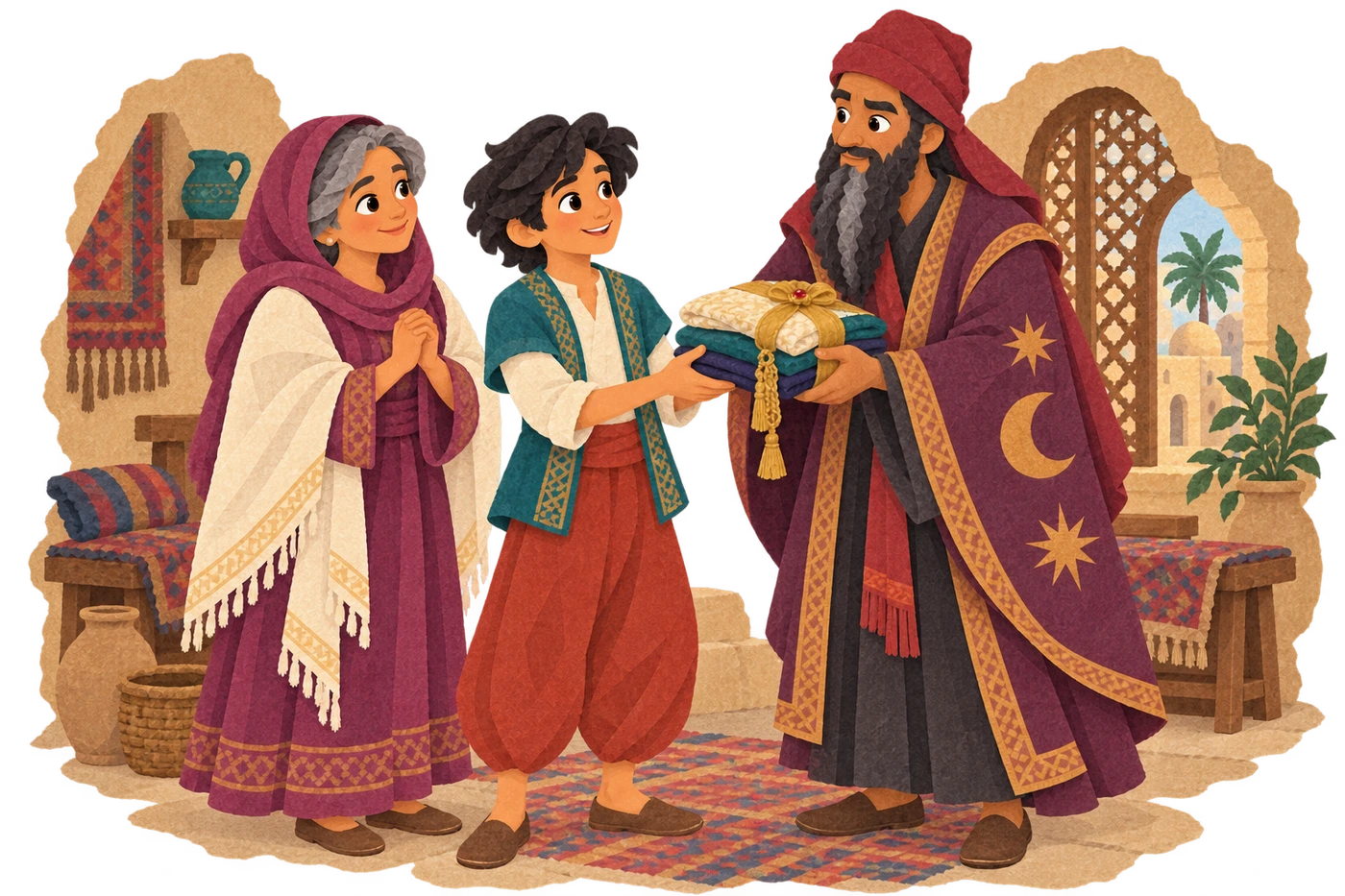
An African magician learned Mustapha’s name and falsely told Aladdin that he was his father’s brother. He said he had been away for forty years.
The false uncle brought food and new clothes and promised Aladdin a shop, winning the family’s trust. He spoke as though he wanted to help.
A Lamp in the Cave
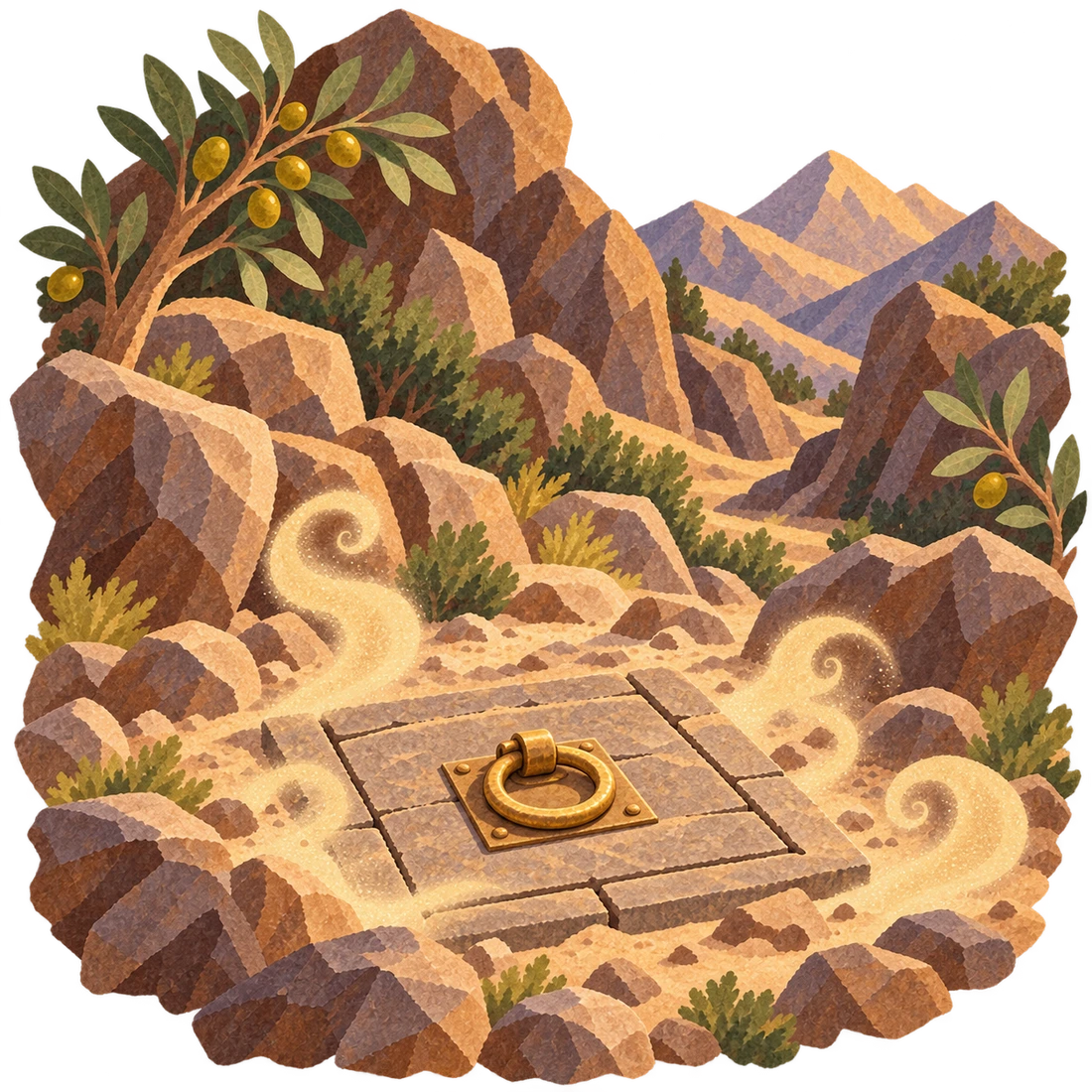
The magician took Aladdin through beautiful gardens, then much farther away between two mountains. They stopped at a fountain to eat.
At the mountains, the magician lit a fire and threw powder into it, making the earth open above a hidden stone door. Smoke rose as he spoke strange words.
Enjoying the story? Sign in to read the whole book.
Browse all storiesAbout this retelling
Explore this illustrated story at four reading levels. Each level follows the same essential events.
Collection: Chapter books
Retelling: Arabian Nights · Persia · Part 1 of 3
For parents: After Violet Hunt’s condensed Aladdin in The Blue Fairy Book (1889), edited by Andrew Lang. Setting adapted to Persia at the reader’s request, following the edition’s early Persia reference; later China references are relocated. Persian-inspired art is a fantasy interpretation. Princess unnamed; both genies, interrupted marriage, lamp exchange, poisoned magician, Fatima’s death, brother’s defeat and succession retained. Deaths non-graphic; enslaved attendants called servants.
Public-domain source: View the recorded source edition