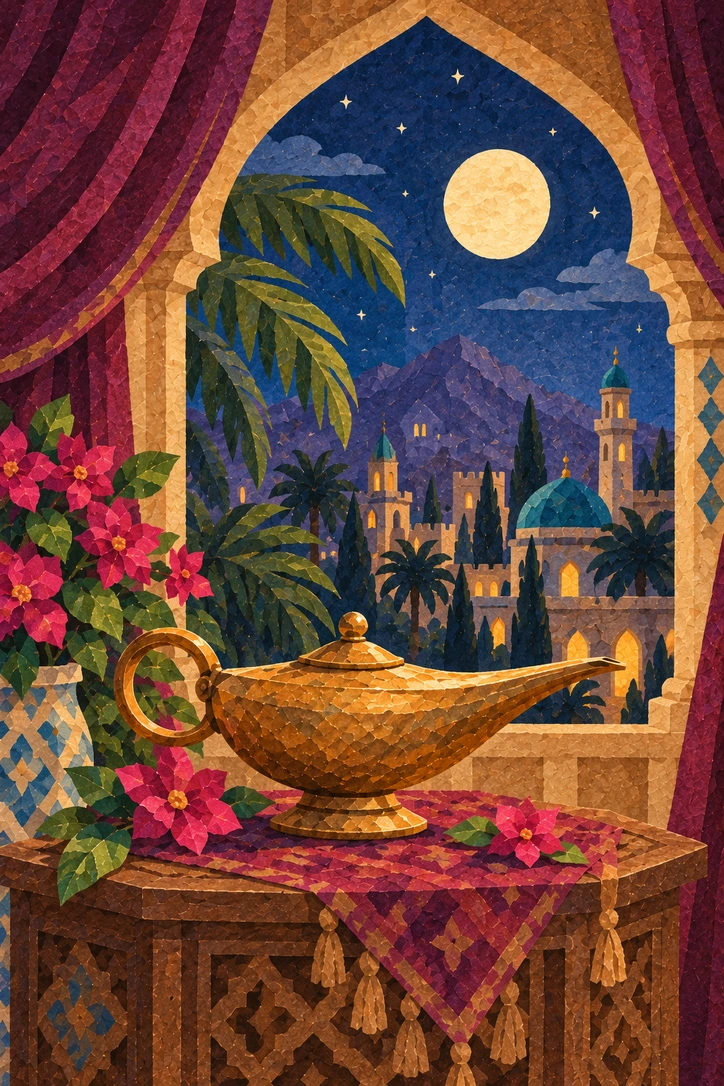
Aladdin and the Wonderful Lamp · Part 3 of 3
The Stolen Lamp
Two enchanted objects change Aladdin’s life—and draw dangerous enemies to his door.
Preview the first three pages. Sign in to read the whole book.
Explore the libraryRead a preview
The Stolen Lamp
Aladdin and his wife, the Sultan’s daughter, lived in a palace created by a magic lamp; Aladdin also had a magic ring with a different genie. He had married the Princess after years of adventures.
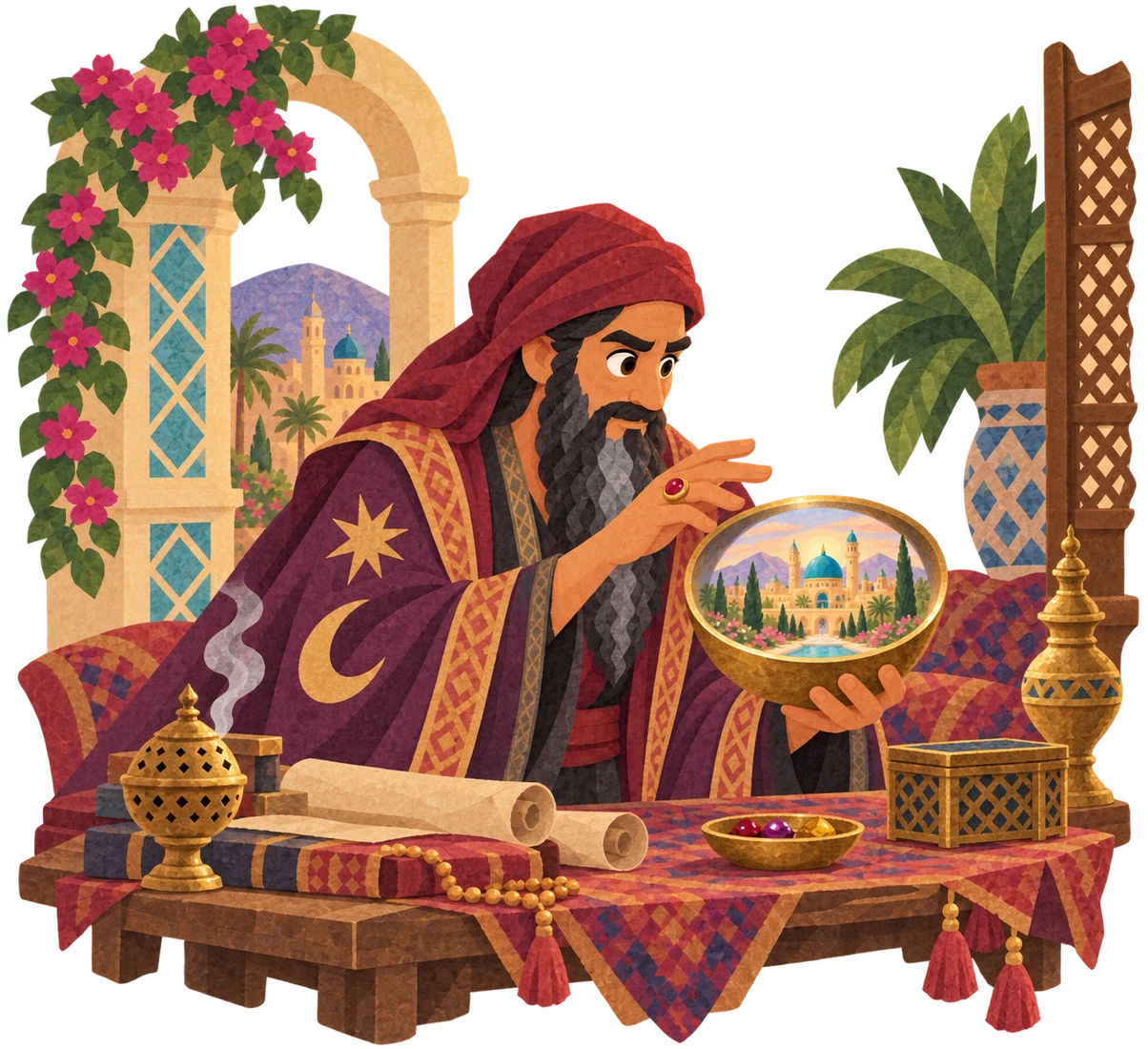
In Africa, the magician who had trapped young Aladdin in a cave learned by magic that he was alive, and returned to the Persian city to steal the lamp. He discovered Aladdin’s wealth as well.
The Stolen Lamp
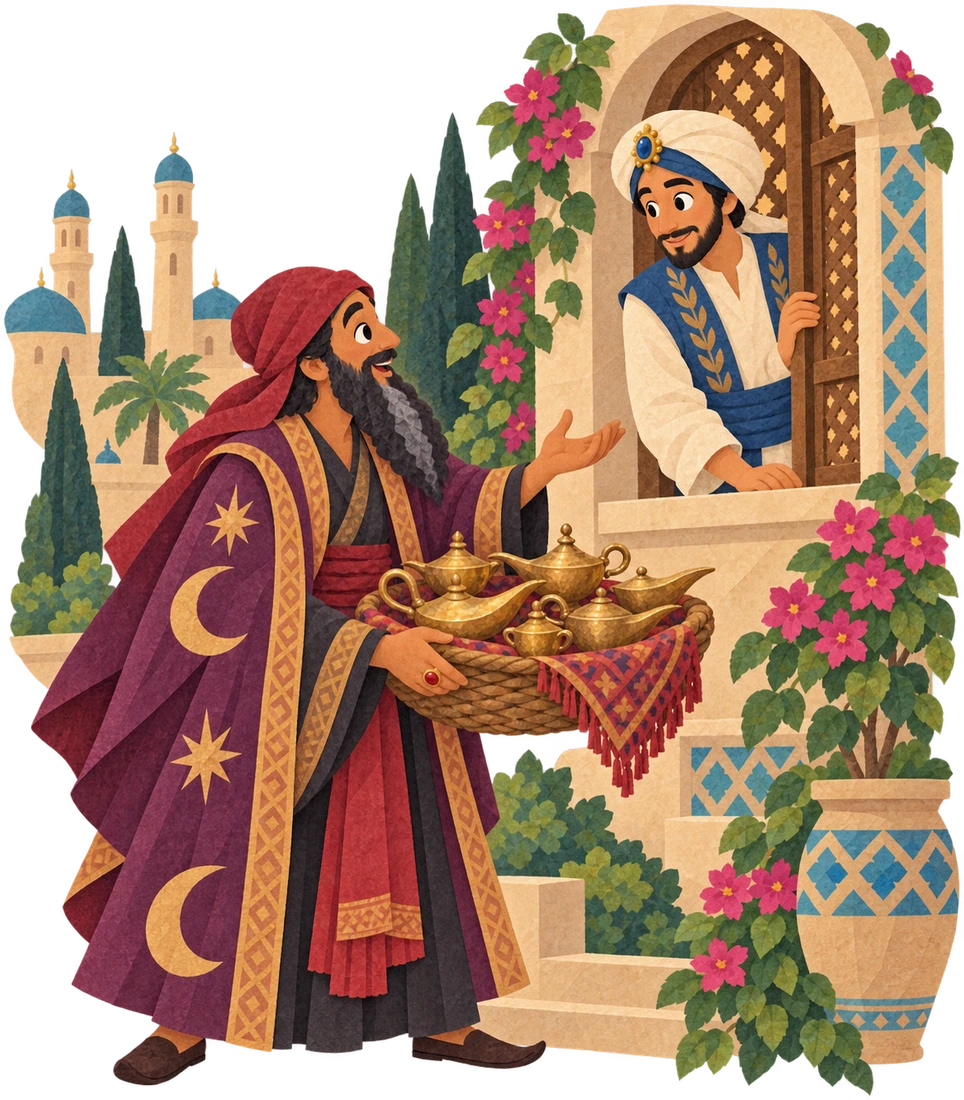
When Aladdin went hunting for eight days, he left the old lamp on a palace ledge, and the magician came calling, “New lamps for old!” He carried a basket of bright new lamps.
The Princess did not know the old lamp’s power, so she agreed when a servant suggested exchanging it. The battered brass looked less valuable than a shiny replacement.

The Stolen Lamp
The servant gave the magician Aladdin’s old lamp and brought back a new one. The trade seemed harmless inside the palace.
That night, the magician rubbed the stolen lamp and ordered its genie to carry him, the palace and the Princess to Africa. The lamp genie obeyed its new holder.
Enjoying the story? Sign in to read the whole book.
Browse all storiesAbout this retelling
Explore this illustrated story at four reading levels. Each level follows the same essential events.
Collection: Chapter books
Retelling: Arabian Nights · Persia · Part 3 of 3
For parents: After Violet Hunt’s condensed Aladdin in The Blue Fairy Book (1889), edited by Andrew Lang. Setting adapted to Persia at the reader’s request, following the edition’s early Persia reference; later China references are relocated. Persian-inspired art is a fantasy interpretation. Princess unnamed; both genies, interrupted marriage, lamp exchange, poisoned magician, Fatima’s death, brother’s defeat and succession retained. Deaths non-graphic; enslaved attendants called servants.
Public-domain source: View the recorded source edition