The Monkey and the Crocodile
Two old river tales about quick thinking
Preview the first three pages. Sign in to read the whole book.
Explore the libraryRead a preview
The Monkey and the Crocodile
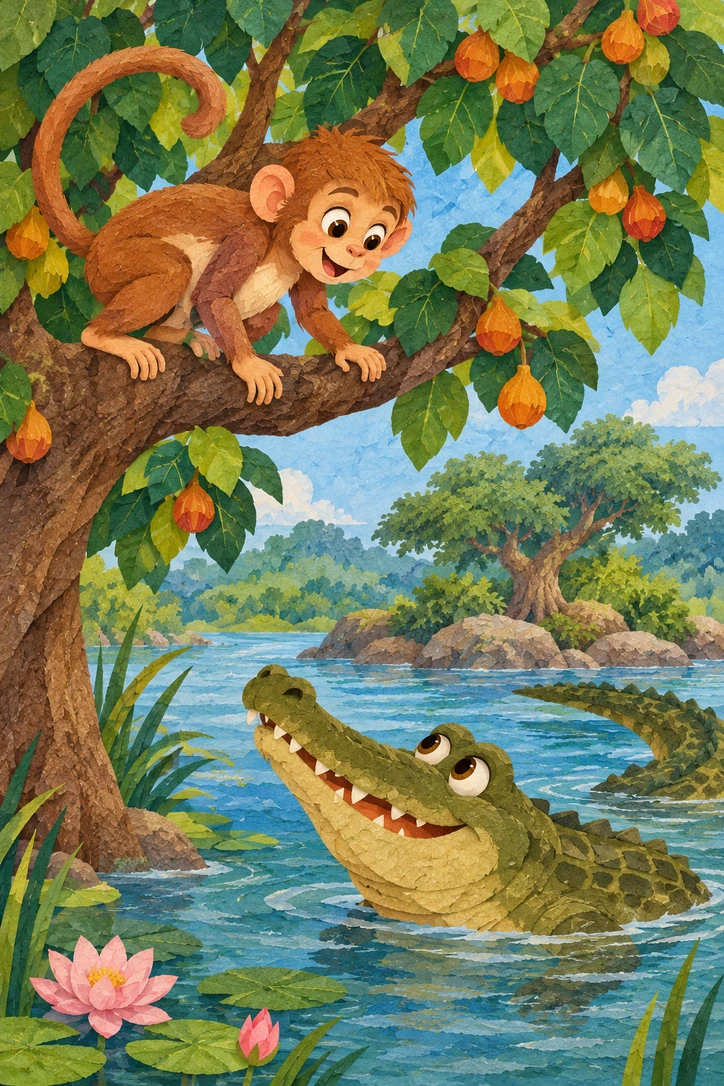
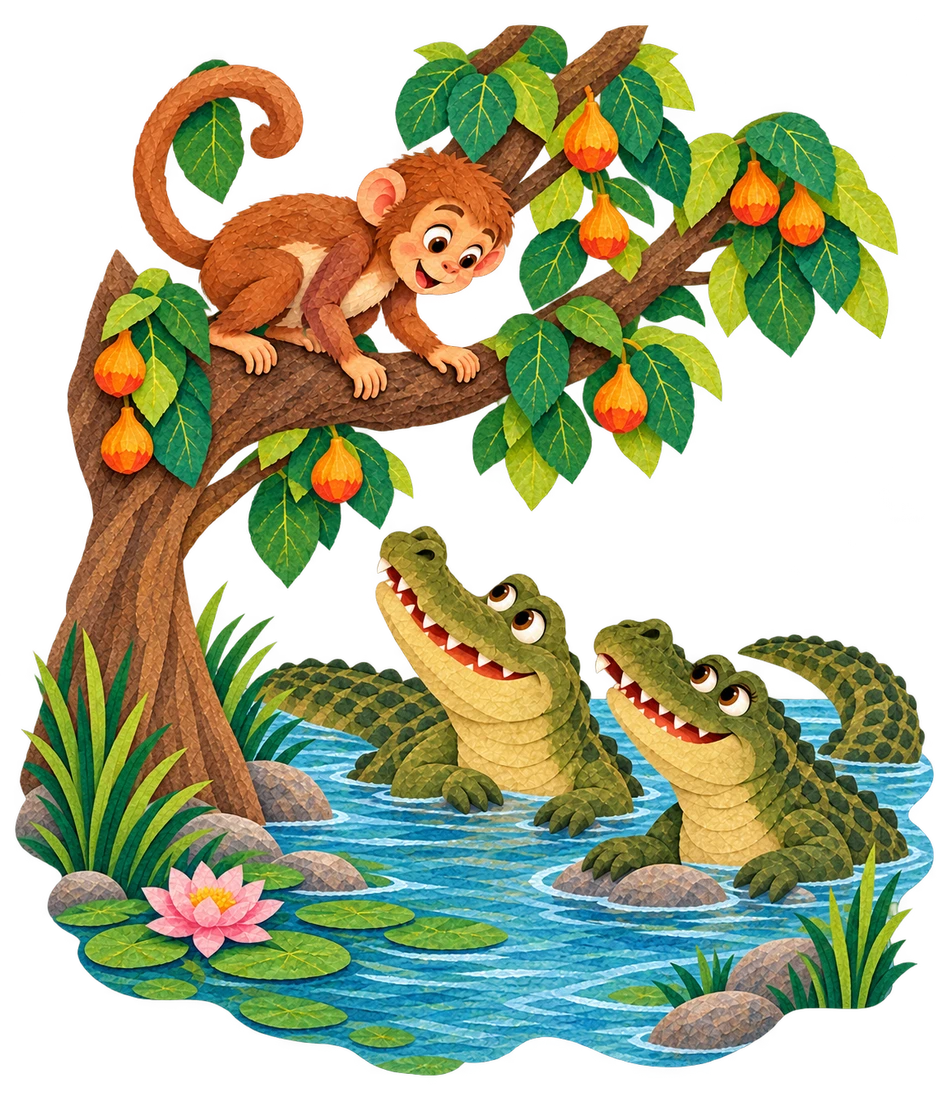
A strong monkey lived beside India’s Ganges River and ate fruit from the trees. He was at home in the forest beside the wide bend of water.
A crocodile in the river had a wife who wanted the monkey’s heart to eat. She asked her husband to catch him.
The Monkey and the Crocodile
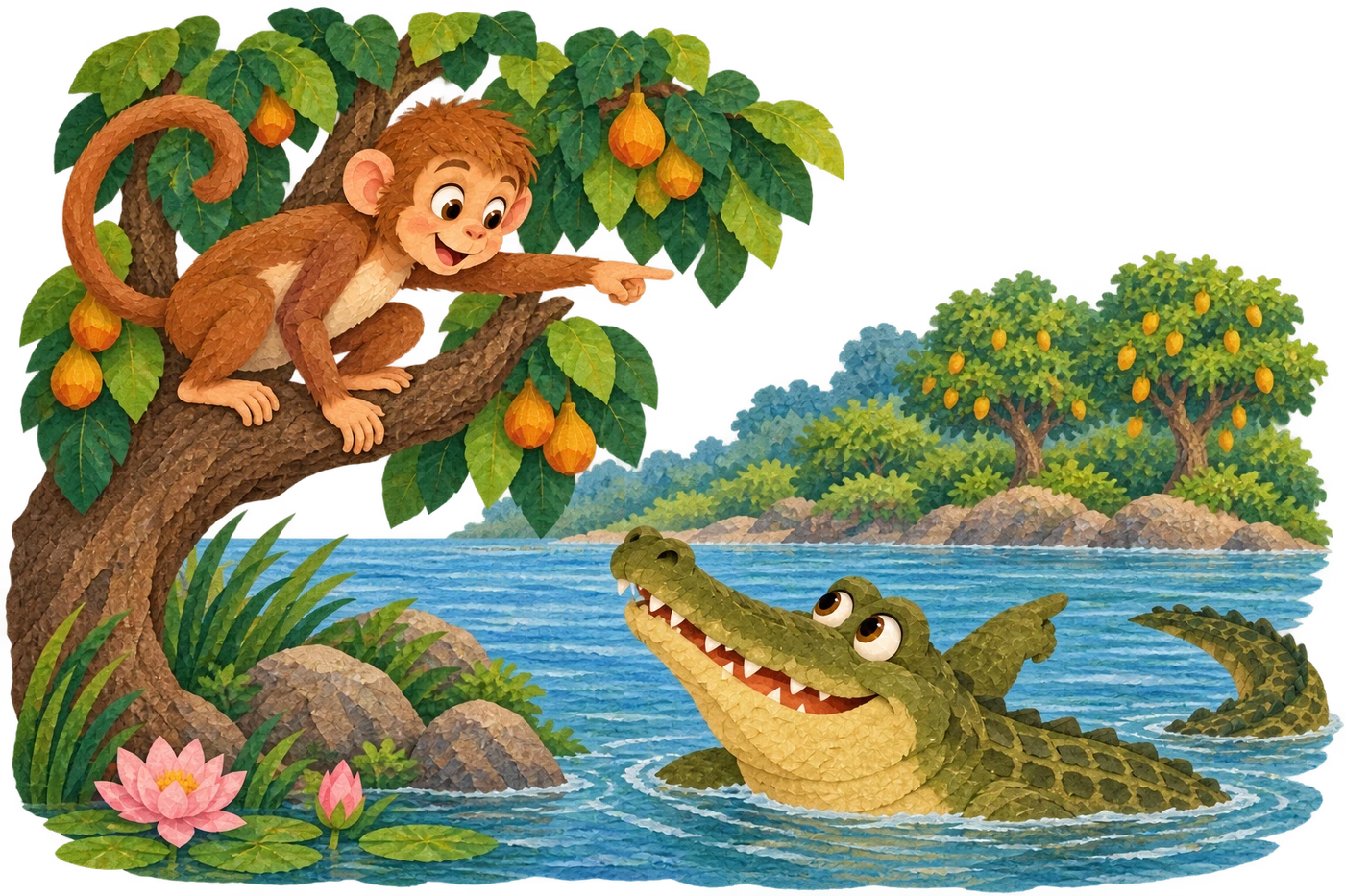
The crocodile told the monkey that sweeter fruit grew on the other side of the river. He spoke of mangoes and other trees loaded with fruit.
When the monkey asked how to cross the deep water, the crocodile offered a ride on his back. The river was too wide for a simple leap.
The Monkey and the Crocodile
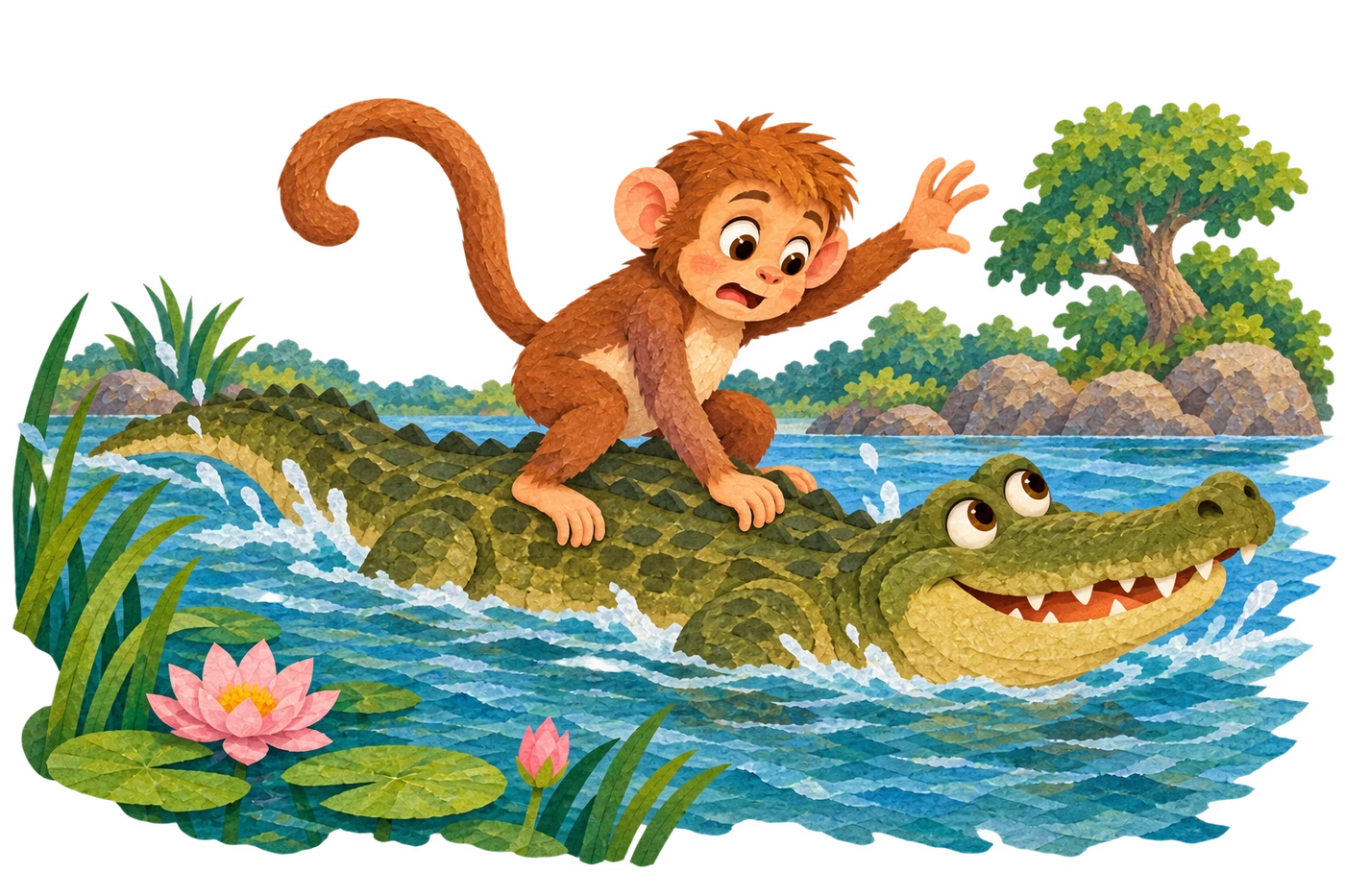
The monkey climbed onto the crocodile’s back, but out in the river the crocodile plunged him under the water. The promised pleasant ride had become dangerous.
“Why are you letting me sink?” cried the monkey, and the crocodile admitted that his wife wanted the monkey’s heart. He had offered the ride to catch his passenger.
Enjoying the story? Sign in to read the whole book.
Browse all storiesAbout this retelling
Explore this illustrated story at four reading levels. Each level follows the same essential events.
Collection: World folktales
Retelling: India · Jātaka tradition
For parents: Original retellings of two related Jātaka past-tales: No. 208 (W. H. D. Rouse, 1895) and No. 57 (Robert Chalmers, 1895), presented as separate episodes. Keeps the crocodile’s wife, heart-on-fig-tree trick, river-rock trap, head-leap and original resolutions. Buddhist framing is recorded in the source notes. Danger is non-graphic. The closing-eyes behavior belongs to this tale, not a general zoological claim.
Public-domain source: View the recorded source edition