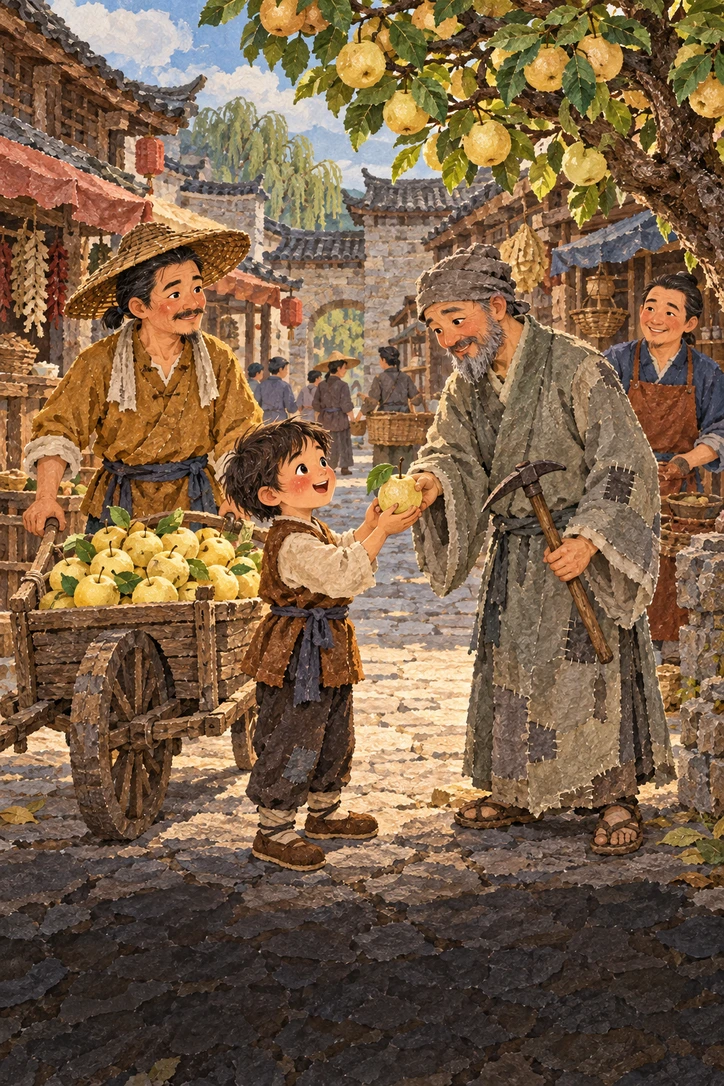
The Wonderful Pear Tree
A market miracle hides a clever surprise
Preview the first three pages. Sign in to read the whole book.
Explore the libraryRead a preview
The Wonderful Pear Tree
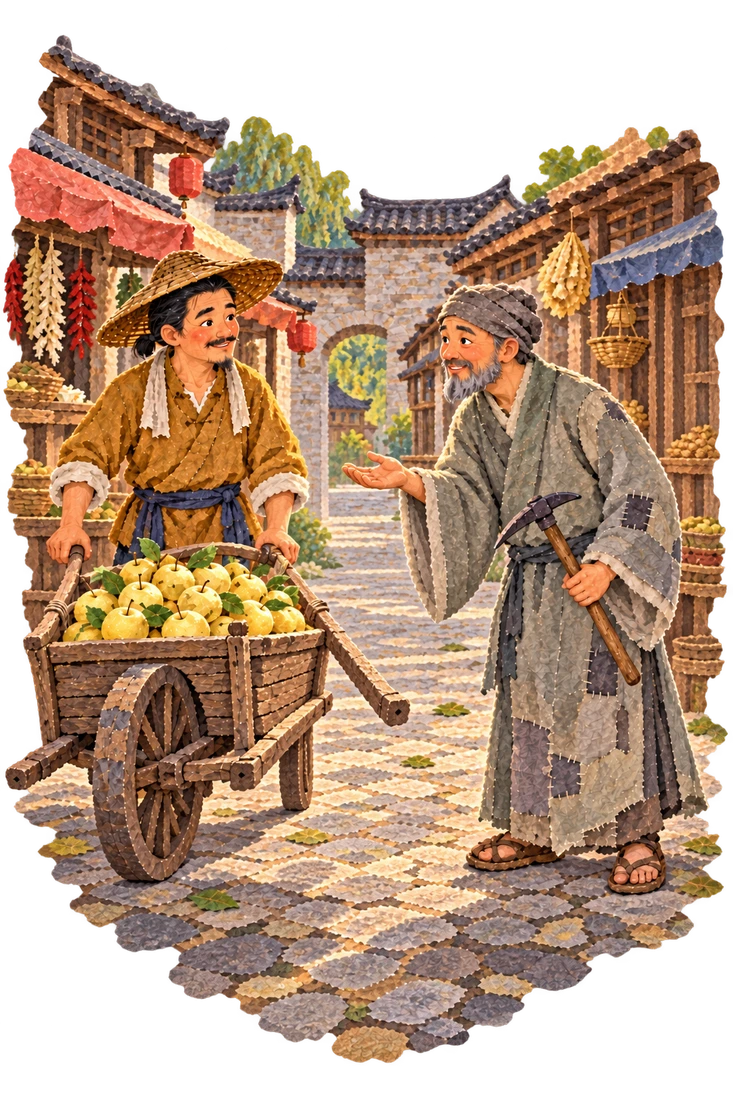
A farmer in China brought sweet pears to market to sell. His wooden cart had one wheel and two long handles. The fragrant pears filled his pushcart.
A wandering monk in a torn cap and patched robe came to his cart and asked for one pear. He carried a small pick-axe. The tool rested on his shoulder.
The Wonderful Pear Tree
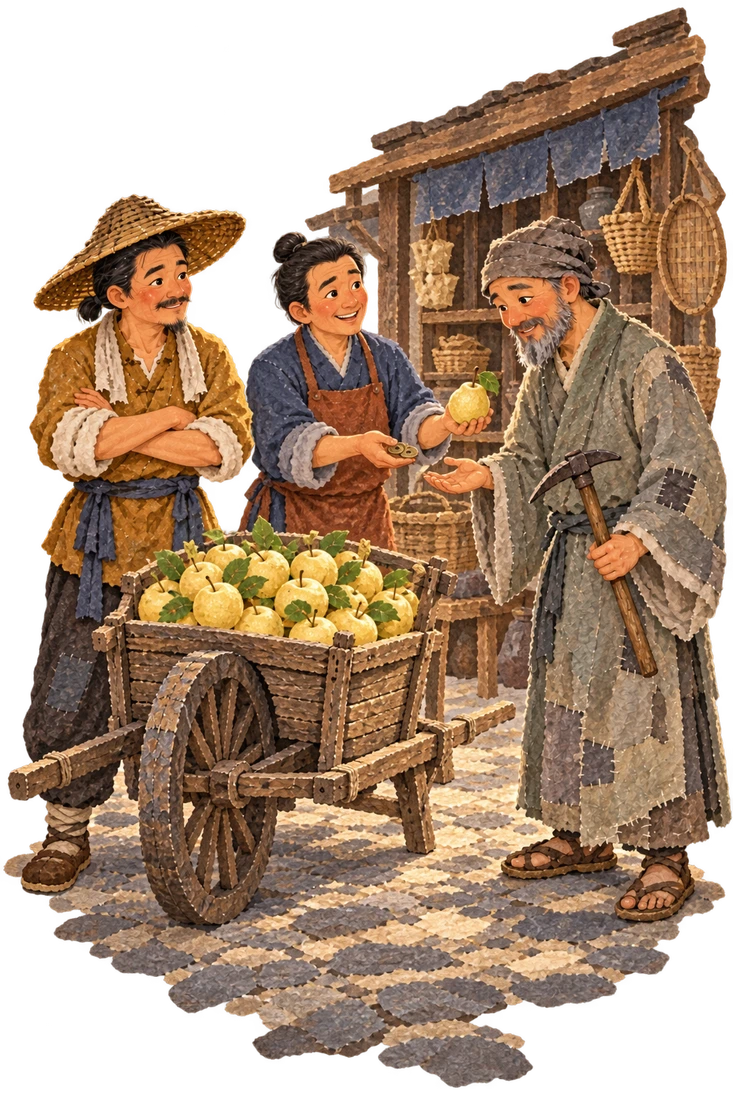
The farmer refused and grew angry; even when the people nearby urged him to share a small pear, he would not. The monk waited beside the cart.
An artisan, who made things in a nearby shop, bought a pear from the farmer and gave it to the monk to end the noisy argument. The artisan paid with his own money.
The Wonderful Pear Tree
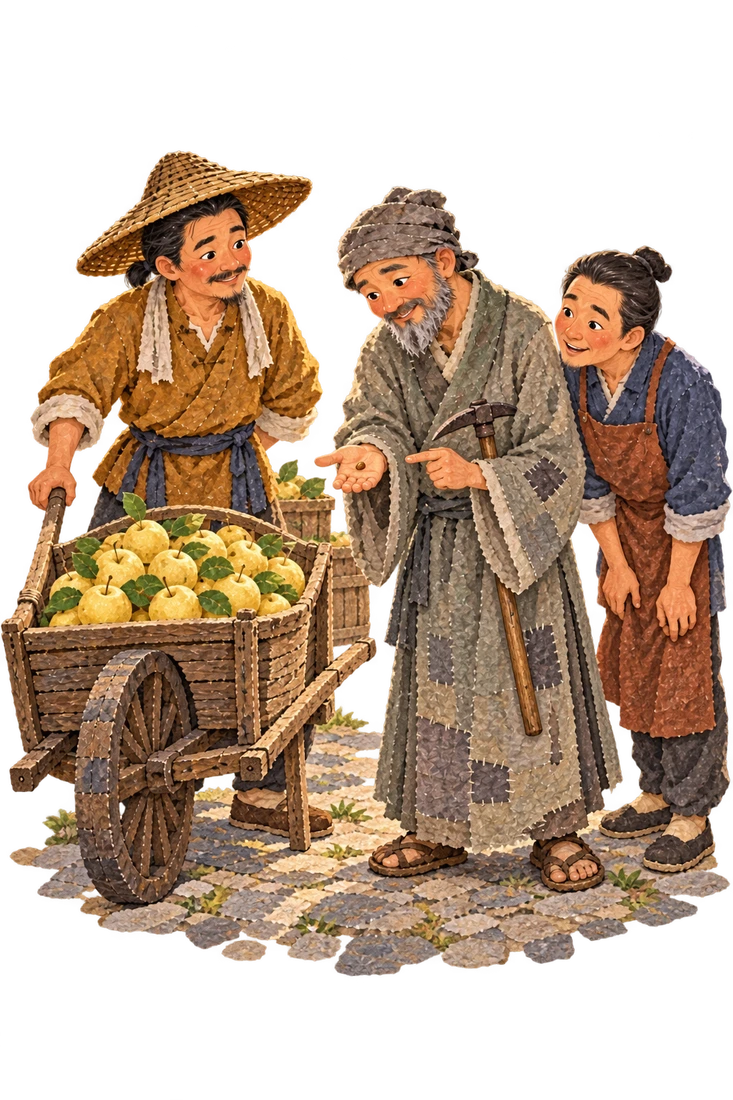
The monk thanked the artisan and invited everyone to share some beautiful pears of his own. People gathered around to listen.
“Why not eat your own?” someone asked; he said he first needed a seed, then ate the gifted pear and saved its seed. The crowd watched him finish.
Enjoying the story? Sign in to read the whole book.
Browse all storiesAbout this retelling
Explore this illustrated story at four reading levels. Each level follows the same essential events.
Collection: East Asian folktales
Retelling: China · The Miserly Farmer
For parents: After “The Miserly Farmer” in Richard Wilhelm’s The Chinese Fairy Book, translated by Frederick H. Martens (1921). Keeps the paid-for pear, planted seed, hot water, shared fruit, cut tree, empty cart, missing handle and laughing crowd. The edition explains that its “axle” means a handle of a one-wheel Chinese pushcart. No invented apology or reform.
Public-domain source: View the recorded source edition